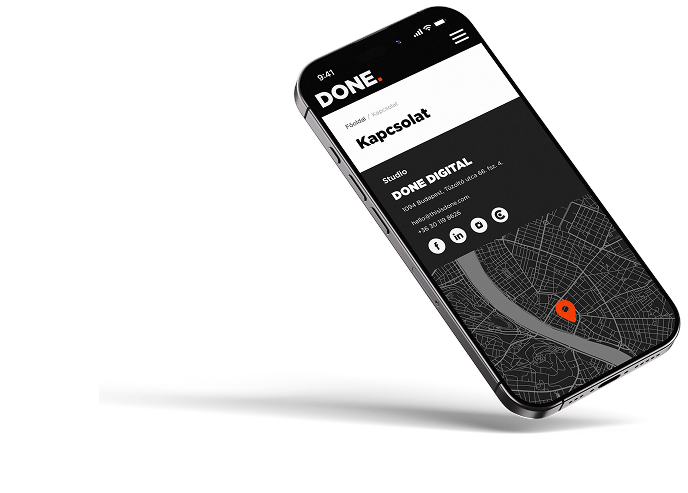
UI design
The face and character of your digital product
First impressions matter in the digital space, as in many cases the very first glance is your most important opportunity to win over a user.
The user first comes into contact with your product through the user interface. That’s why we don’t treat UI design as a purely aesthetic matter. It is a key design process whose role is to ensure that visual appearance supports business goals, while keeping usage natural and intuitive for the user.
What do we mean by UI design, exactly?
The user interface is the collection of all visual elements a visitor encounters and interacts with on the screen — a direct connection between people and software.
The goal of UI design is not to be visually striking on its own, but to provide a clear, easy-to-follow, and consistent visual framework for how a product works.
UX design forms the foundation of this visual work, as it defines the operating logic and structure of the digital product. UI, in turn, is the creative, user-facing surface of the product that users actually see.
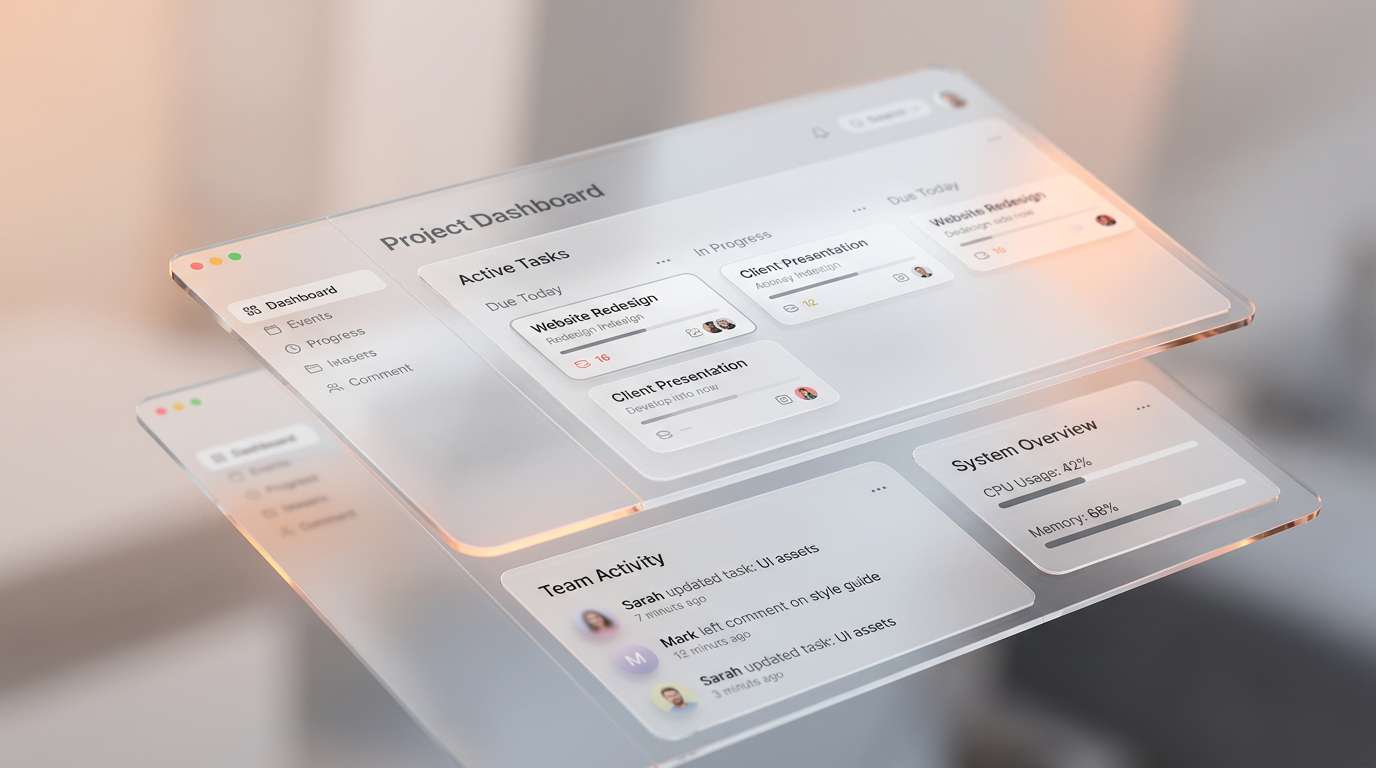
What do our UI designers do?
Our designers are responsible for turning wireframes into usable, consistent, and visually unified interfaces, while also thinking in terms of complete visual systems.
This means they are responsible for the digital product’s:
- visual style, including colours, typography, and imagery,
- interactive elements and their appearance,
- clickable prototypes used to validate concepts before development,
- and the creation of a design system.
Criteria for good UI design
In every project, we work based on a few simple yet essential principles:
- simplicity, as visual overload hinders decision-making;
- conscious visual hierarchy, so important elements are immediately recognisable;
- consistency, which makes the interface predictable;
- accessibility, ensuring the design is usable for all users.
For this reason, when designing an interface we always focus on the elements that truly define usage: buttons and CTAs, input fields and forms, navigation structures, and typography.


Why does mobile UI design require a different mindset?
The answer is simple: different rules apply on mobile, because usage is primarily physical. Users navigate with their thumbs, pay attention for shorter periods, and often use their devices while on the move.
That’s why mobile UI design places particular emphasis on reachability, readability, and ensuring the interface remains consistent across all devices — mobile, tablet, and desktop.
UI design tools
Design work is highly tool-dependent, which is why we primarily work in Figma. This not only enables real-time collaboration with our clients, but also provides a transparent design process, which is especially important when development is handled in-house.
Depending on the project, we also use Adobe Creative Cloud or Sketch.
Let’s talk if you want your digital product to have a distinctive, character-driven visual identity.
References


UX Research and Design
At DONE, we’ve been building digital products long enough to recognize a recurring pattern. A digital project rarely underperforms because it lacks a key feature, has weak visuals, or overwhelms users with too much information.














DONE. has been working in the online space for over a decade: designing, developing and coding digital assets. We know that a fresh appearance and an accurate implementation are just as important as impeccable functionality and efficient operation. We respond to our clients’ challenges by examining business needs, creative requirements and technological capabilities holistically.
Those who chose us












Get in Touch with Us!
Let’s work together to refresh your website!